How eye tracking and visual insights can give F1 drivers a winning edge
7th Jan 2026First published by www.tobii.com. copyright
Formula 1 is a sport where decisions are made at speeds that leave no margin for error. Drivers are having to take in and process information in fractions of a second with no margin for error. I have been fortunate to work with a number of drivers within the sport and examine how they gather and use visual information while operating at the very limits of human performance.
How eye tracking reveals attention shifts that impact lap times
One tool I have used to help me in this domain is eye tracking. This allows me to see precisely where a driver is focused, when they make shifts of attention, whether this changes when they are under pressure — and ultimately how their gaze behavior impacts on the lap times.
An example of how I used this in practice comes from work with a driver who I would get to carry out multiple laps in a simulator — usually of the track they would next be racing on. Once they had completed the set number of laps, I would set to work analyzing the data — using their sector times and comparing these to eye movement data thereby allowing me to see any differences in gaze behavior when they were putting in their best sector times, compared with their worst.
I was then able to work with the driver and their coach to develop the most efficient strategies for gathering the necessary information even at top speeds.
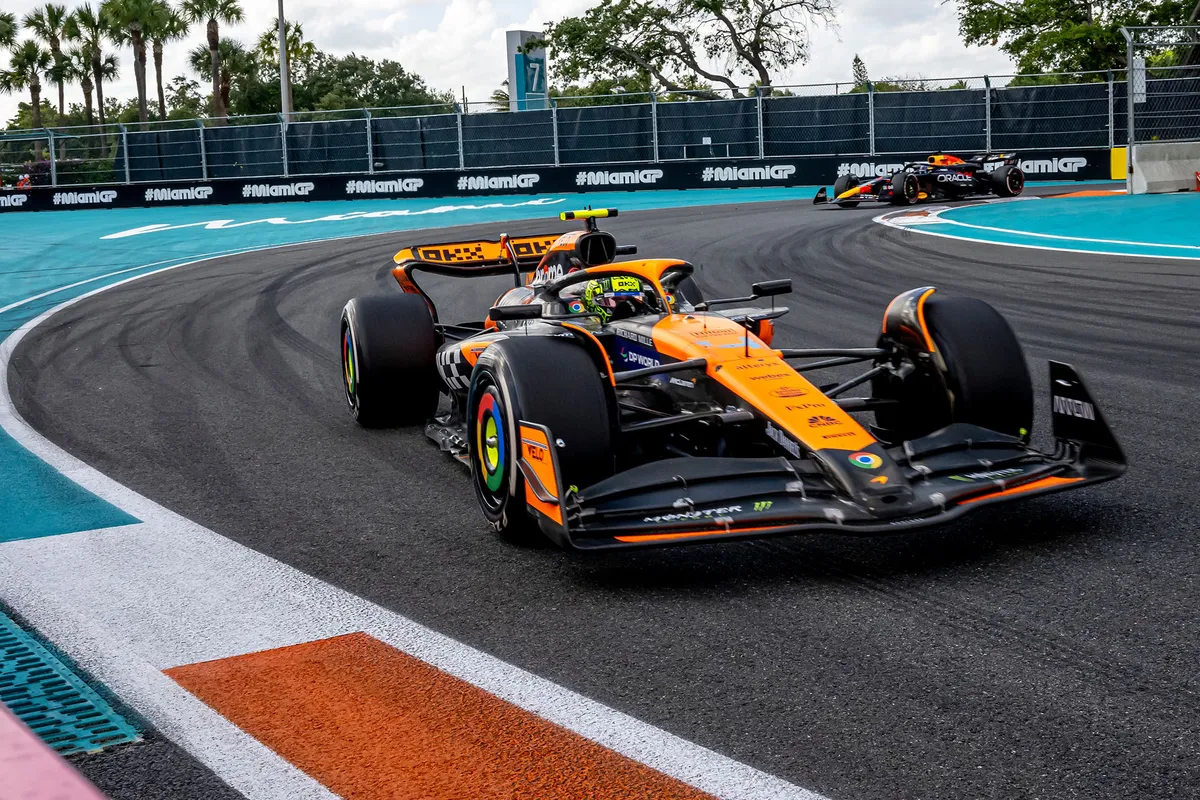
Newer developments within the eye tracking field now allow for even more interesting data to be understood while a driver is in action. Through analyzing pupil dilation, we can understand the level of cognitive load a driver is facing and therefore get a better understanding of when they might be at risk of poor decision making. This information is invaluable and can help the race engineer to know when they need to give prompts to keep their driver fully focused, and when they should remain quiet and not give information which could lead to an overload.
The impact of visual skills on driver performance
Whilst an eye tracker is an important tool for my work with drivers, their gaze behavior is not all I am interested in. There are multiple other factors which will affect their performance from a visual perspective. I will usually start my work with a driver by carrying out a full visual assessment to get an understanding of their visual skills such as peripheral awareness, reaction time, and the speed at which they can move their eyes. I have carried out this type of assessment on drivers such as Max Verstappen and Alex Albon — with the results going to their performance coaches along with training exercises to improve these visual aspects as well as warm-up activities to ensure they are fully prepared come race time.
Eye tracking expands athlete evaluation
In practice, eye tracking is not a replacement for the other methods of visual assessment that I use with athletes. Instead, I see it as a way of expanding and contextualizing them.
For example, using the Vienna Test system to measure Peripheral awareness gives me a precise measure of the visual angle that an athlete can see, under extremely controlled conditions. This is important as it provides a standardized metric that demonstrates the limits of an athlete’s ability, which can then be monitored and re-tested over time. Similarly tests of saccadic eye-speed or reaction time allow me to understand what an athlete is capable of — much like doing a sprint test, in a straight line, to measure top speeds an athlete can run. Using the eye tracker can then show me whether these skills are being used effectively during performance. It provides a bridge between laboratory-based assessment and real-world performance, enabling me to understand the athlete in greater detail and provide them with the most appropriate training to maximize their chance of success.
Learn how Dr. Wimshurst used eye tracking to help golfers elevate their game and improved the performance of biathlon athletes.
How helmet color revealed surprising effects on Lando Norris’ vision
Our new Formula 1 world champion, Lando Norris, has also undertaken a visual screening with me several times over the years. Interestingly, his performance coach Jon Malvern has also had me working on projects to provide further insight into Lando’s visual abilities.
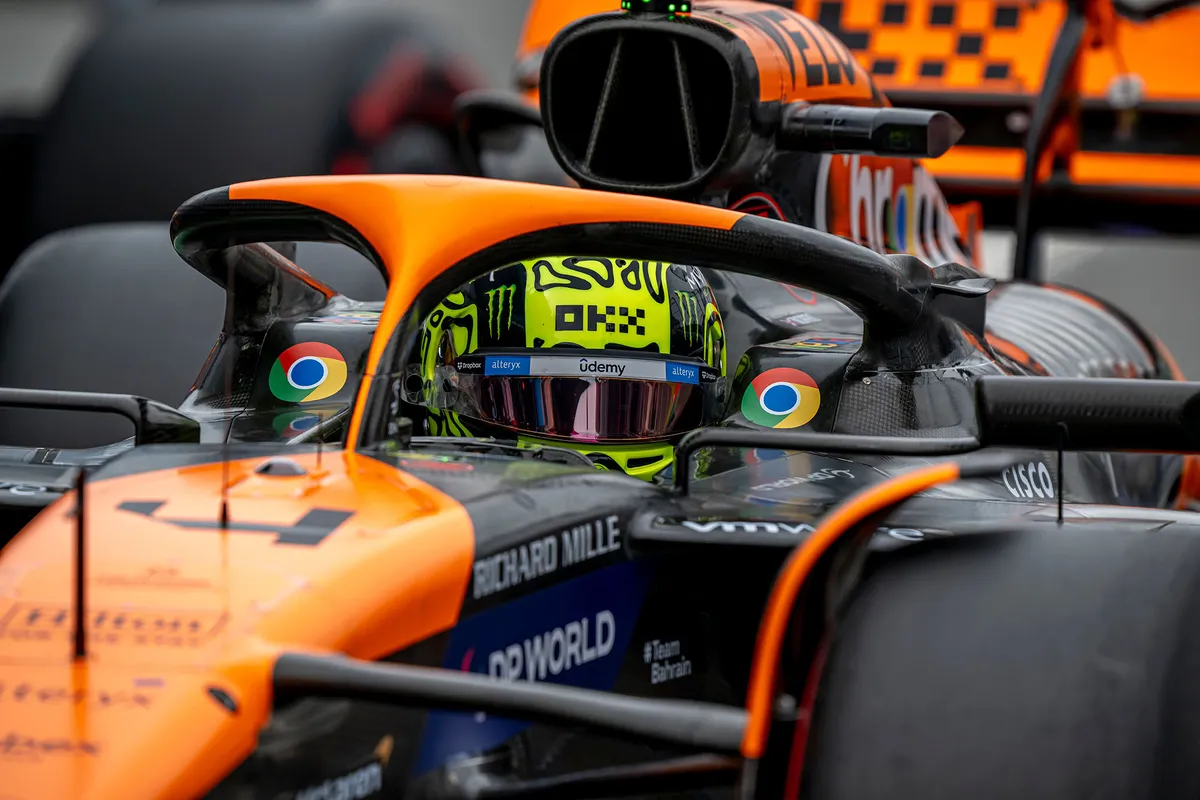
An example of this was a few years ago when Lando’s helmet sponsors offered him the opportunity to have different coloured padding inside his helmet. Whilst for many drivers, how this would impact performance was not even considered, Jon had concerns that since this colour would form the very edge of Lando’s visual field, it may affect his driving.
This led to a day of testing, and the results found that there was up to a 15˚ difference in Lando’s peripheral vision and 10% difference in his reaction speed depending on the colour of his helmet interior.
These differences were far more significant than I was expecting and in driving terms could have a huge impact on his performance on the track.
Small details decide big wins
In a sport where the world championship went down to the final race of the 2025 F1 season and was clinched by just 2 points, small details can make all the difference. When race wins come down to fractions of a second, insights from eye tracking and visual assessments can be the difference between winning and losing.
Republished with permission: This article was originally published by www.tobii.com on 5th January 2026 and is republished here with permission.
Text: © Tobii www.tobii.com.
Images: © the respective rights holders (credited where shown) and used with permission/licence.